 Marketing
The Nigerian Manufacturing industry is no longer where it used to be. But will technology be the missing link to taking the industry where it needs to be?
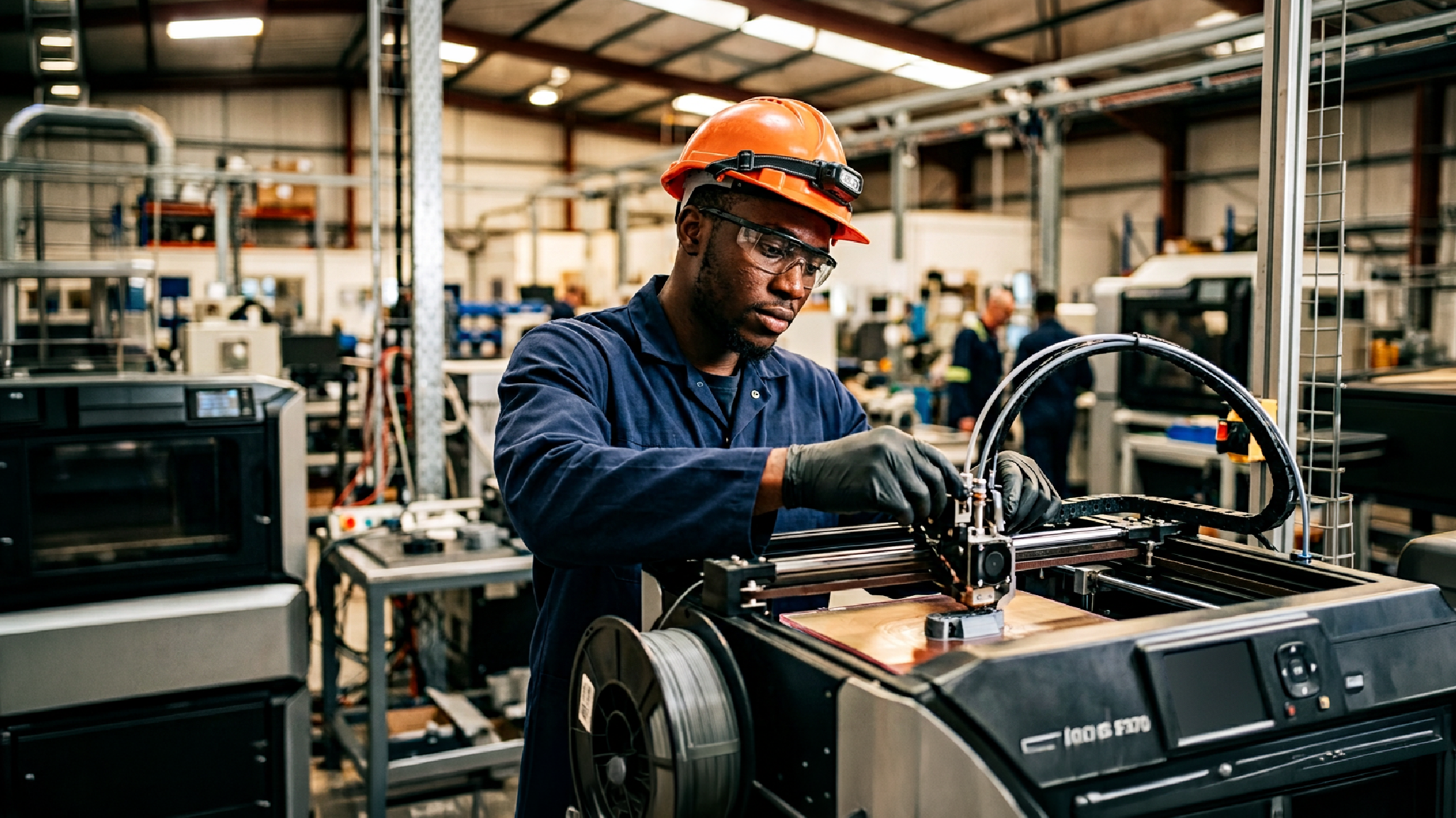
Digital transformation in Nigeria’s manufacturing industry has given rise to leapfrogging methods such as 3D printing and additive manufacturing that are now changing the face of local manufacturing in Nigeria.
On May 26, 2026, Meta4’s General Manager, Ayodeji Oguntimehin, joined some of the sharpest minds in Nigeria’s manufacturing industry at the BusinessDay Manufacturing Conference 2026. The conversations focused on the current state of Nigeria’s manufacturing industry, available technologies, such as AI for manufacturing operations, and the challenges, including a poor power supply and limited government support.
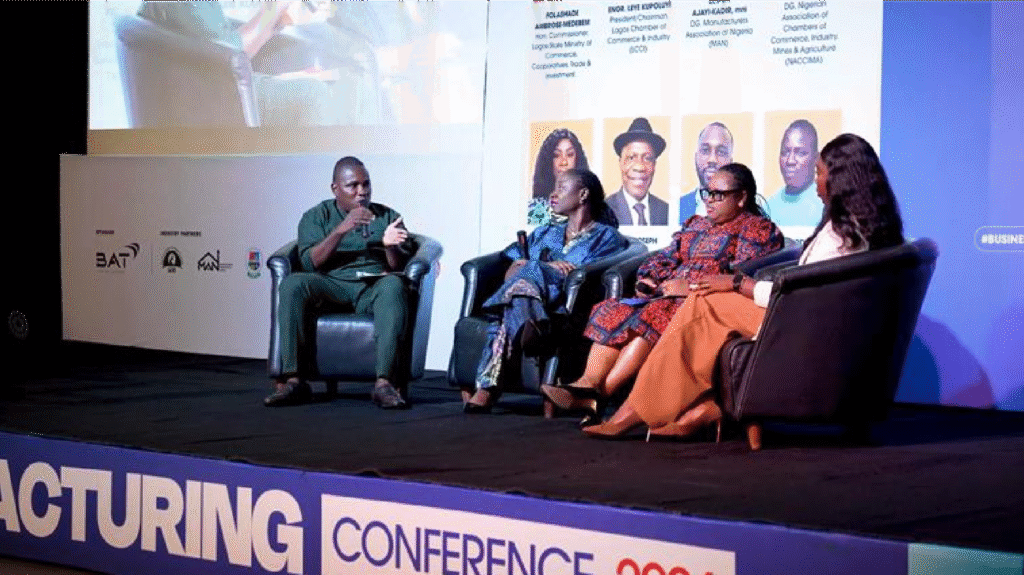
A recurring theme at the Business Day conference was that local manufacturing is at an inflection point, and the people who will shape the future of the manufacturing industry are the ones who can adapt to technology quickly. In Ayodeji Oguntimehin’s words, “The companies that will reap the fruit of technology are those that invest in training their people and processes to handle the digitisation tools that can solve their problems.”
Another clear insight was that technology alone cannot solve structural inefficiencies. For technology to help, growth barriers like epileptic power supply must be fixed.
Oluchi Odimuko, the Assistant Director for Sectoral and Regulatory Affairs (MAN), said: “The Nigerian government needs the political will to grow the manufacturing sector so we can channel other funds to innovation”.
According to the Manufacturers Association of Nigeria (MAN), manufacturers spent N1.3 trillion on alternative power supply in 2025. (Source: Punch)
While these structural inefficiencies currently pose a major challenge, the narrative is shifting from what Nigerian manufacturing lacks to what it can become.
How Technology is Fixing the Nigerian Manufacturing Industry
It’s no longer a question of whether technology can redefine the process and quality of local manufacturing; it’s a question of what technology is available to manufacturers in Nigeria.
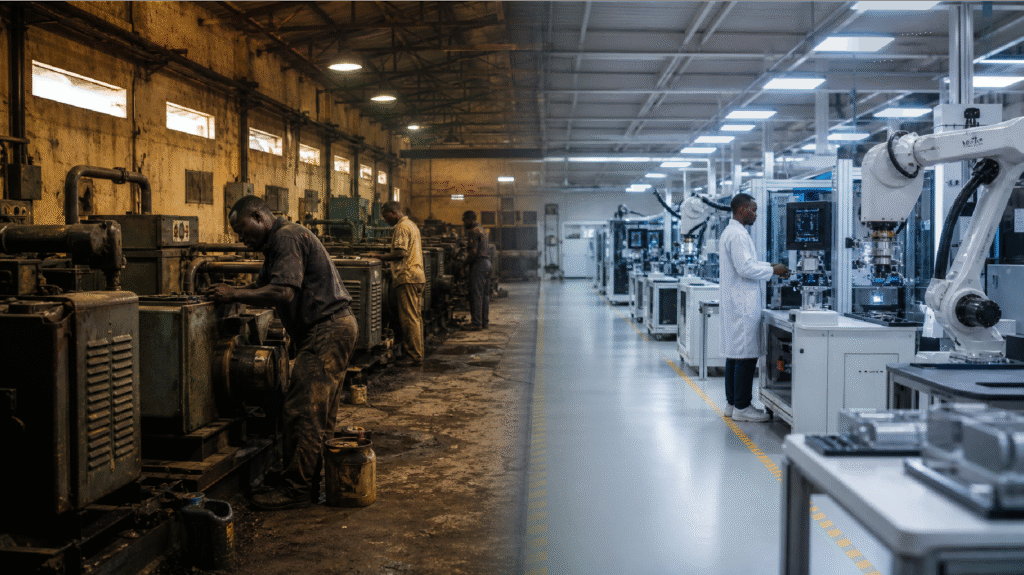
Nigerian manufacturers are beginning to focus not just on adoption, but on all-around transformation: rethinking workflows, execution systems, and operational structures alongside technology.
Here are a few technological shifts on the path to fixing the manufacturing industry.
AI Automation and The Shift to Smarter Operations
A key part of the discussion at the conference focused on AI for manufacturing operations and its expanding role in production planning, predictive maintenance, supply chain optimisation, and quality control.
The real opportunity shows up when AI is embedded in the production process, where it can directly influence output, reduce waste, and improve production speed.
In the face of rising production costs, persistent FX pressures, import dependency, and infrastructure gaps, these AI-powered improvements are not optional; they are essential for survival and long-term competitiveness.
Additive Manufacturing and The Future of Local Production
Another important shift discussed was the growing relevance of additive manufacturing in Nigeria.
No longer limited to prototyping, additive manufacturing is increasingly being explored as a production method that supports flexibility and speed. For manufacturers dealing with FX volatility, import delays, and supply chain disruptions, this offers a solid alternative.
It also strengthens the case for local manufacturing in Nigeria by reducing dependency on external tooling and enabling faster iteration cycles.
Read More: Bringing 3D Printing to the Nigerian Market
Innovative companies like Meta4 are taking advantage of 3D printing and additive manufacturing to manufacture corporate gifts, branded keepsakes, cultural artefacts, and awards from scratch in Nigeria, in bulk and within short timelines.
The Barrier is Still Structural…
While technology is a powerful change factor, it is not the primary factor.
The deeper challenges remain structural: unreliable electricity, infrastructure deficits, FX pressures, and high cost of production. These factors continue to limit how effectively even the best technologies can be deployed. Until these issues are addressed, technology will improve processes, but it will not fully improve the manufacturing productivity in Nigeria.
Still, Nigerian manufacturers who can adapt to digital transformation quickly and optimise operations continuously will be better positioned to compete in both local and global markets.
Read More: How 3D Printing is Shaping the Future of Corporate Gifting in Nigeria
At Meta4, events like the Business Day conference 2026 reinforce how we think about manufacturing in Nigeria. We are not only focused on what is made, but on how it is made and how that process can be improved to better serve quality.
Conclusion
So, can technology fix Nigeria’s manufacturing industry? Not on its own.
But when combined with better systems, stronger execution, a willingness to rethink how manufacturing works and the ability to adapt to technological shifts, it becomes an effective tool for growth.
That is the real lesson from the Business Day Manufacturing conference 2026, and it is a principle Meta4 builds on every day.
Want to improve your marketing campaigns and gain brand recall through bespoke corporate gifts, custom awards, and branded keepsakes made in Nigeria with additive manufacturing? Start a conversation with us now.


 Marketing